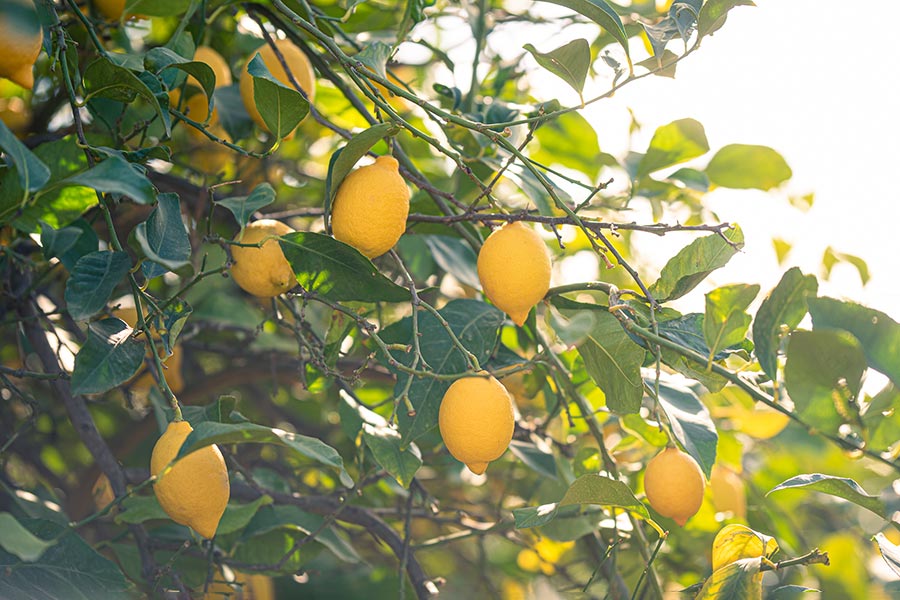
A lemon tree often reveals its state of health through its leaves. Yellowing, spots, deformities, or dry edges may indicate that the tree is not properly absorbing a certain nutrient.
However, not all yellow leaves indicate the same problem. The symptoms may also be caused by watering, soil pH, salinity, or a pest. Therefore, before applying any product, it is important to observe which leaves are affected and determine the cause of the problem.
At Frutas Poveda, we have been growing lemon trees in Murcia. Today we’ll tell you about the most common nutritional deficiencies and what signs can help you identify them.
Why do nutritional deficiencies occur in lemon trees?
A deficiency occurs when the lemon tree lacks an essential nutrient or is unable to absorb it properly.
The most common causes are:
- Lack of nutrients in the soil.
- A pH level that hinders its absorption.
- Too much or too little watering.
- Root problems.
- Nutrient imbalances.
- A fertilization plan that isn’t well suited to the crop.
In calcareous soils, some micronutrients may be locked up even if they are present. For this reason, a soil, water, or plant tissue analysis is the best way to determine what the tree actually needs.
Yellow Leaves on a Lemon Tree: Main Causes
Iron Deficiency
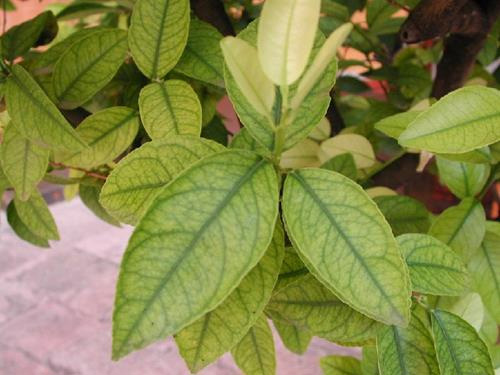
Iron deficiency, known as iron chlorosis, usually first appears on young leaves.
The leaf turns yellow between the veins, while the veins remain green.
In advanced cases, it can lighten almost completely.
This condition often occurs when the soil is calcareous or has a high pH. The solution should be determined after testing the soil and may include iron amendments and adjustments to crop management practices.
Manganese Deficiency
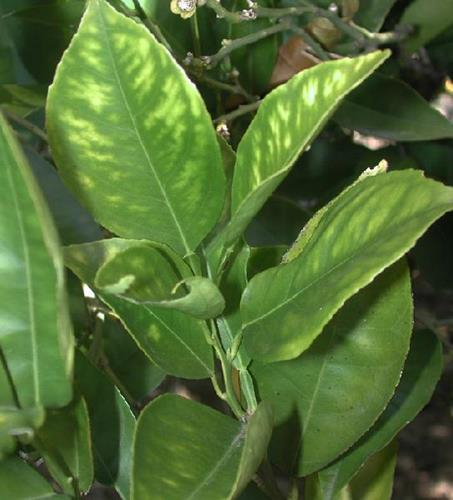
Manganese deficiency also causes yellowing between the veins of young leaves, but the pattern is usually less distinct than with iron deficiency.
The leaf has a yellowish-green or dull appearance. Since these two deficiencies can be confused, it is best to confirm the diagnosis before applying a corrective treatment.
Zinc Deficiency
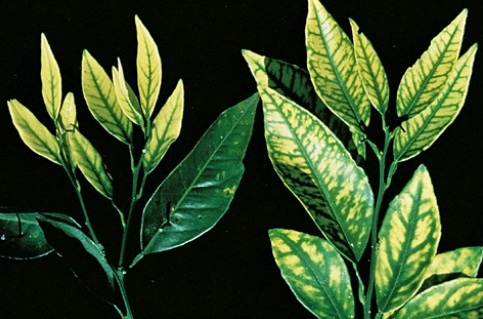
A zinc deficiency can cause young leaves to be small, narrow, or misshapen.
The shoots have shorter distances between leaves and may take on a compact appearance.
When the deficiency is severe, it can also affect the tree’s growth and yield.
Magnesium Deficiency
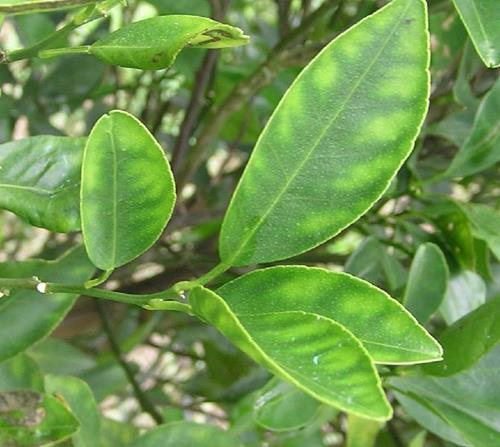
Unlike the previous ones, magnesium deficiency first appears in mature leaves.
Yellowing usually spreads from the center or base of the leaf and can form a pattern resembling an inverted “V,” while some areas remain green. If the problem persists, the leaves may fall prematurely.
Nitrogen deficiency
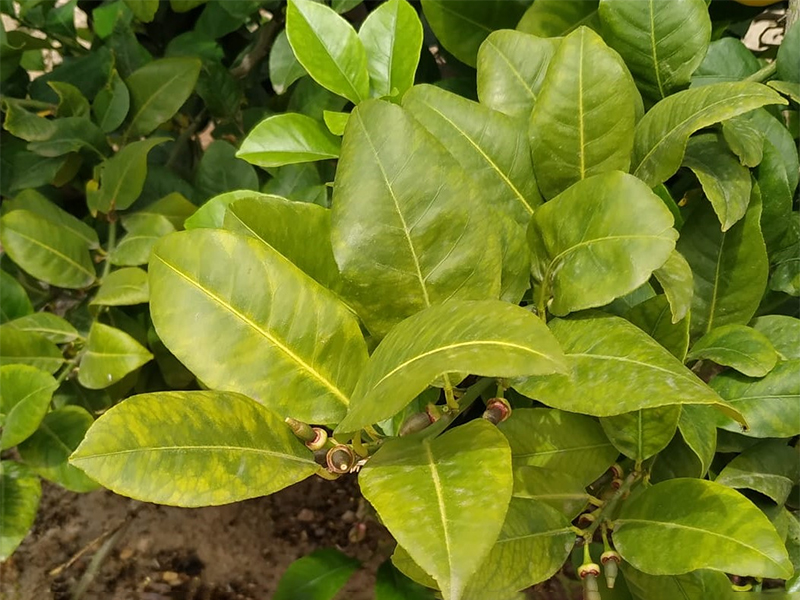
Nitrogen deficiency causes a more uniform yellowing. It usually begins on older leaves and gradually spread throughout the tree.
Slower growth, weak shoots, and a less dense canopy may also be observed. However, an excess of nitrogen is not beneficial either, so the amount applied should be adjusted according to the tree’s age and the stage of cultivation.
Potassium Deficiency
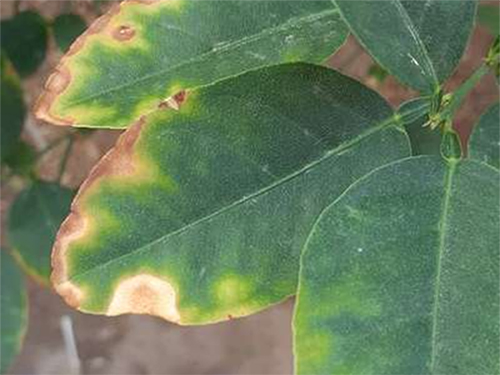
Potassium deficiency usually affects mature leaves first. The edges may turn yellow and eventually take on a dry or scorched appearance.
Potassium plays a role in fruit development and quality, but its requirements must be determined as part of a comprehensive nutritional plan.
How to Recognize Symptoms in Lemon Trees
| Main symptom | Affected leaves | Possible deficiency |
| Yellow with very pronounced veins | Young People | Iron |
| Yellow among more diffuse nerve fibers | Young People | Manganese |
| Small leaves and compact shoots | Young People | Zinc |
| Yellow, “V”-shaped | Adults | Magnesium |
| Uniform yellowing | Women First | Nitrogen |
| Yellow or dry edges | Adults | Potassium |
This table is for reference only. A single symptom may have different causes, and multiple deficiencies may occur at the same time.
Is it a nutritional deficiency, a pest, or an irrigation problem?
Deficiencies tend to follow relatively consistent patterns: they first appear on young or mature leaves and recur in a similar manner in different parts of the tree.
Pests and diseases can cause more irregular symptoms, such as the presence of insects, secretions, burrows, or localized spots. Excess water, salinity, and root damage can also cause yellowing.
If you’re not sure of the cause, avoid applying multiple products one after another. It’s best to check your watering routine and request a test or a technical assessment.
You can find more information in our article on the most common lemon tree pests.
Frequently Asked Questions
1. Why does my lemon tree have yellow leaves?
This may be due to a lack of iron, nitrogen, magnesium, or other nutrients, but it can also be caused by problems with irrigation, pH, roots, salinity, or pests.
2. How can you tell the difference between an iron deficiency and a magnesium deficiency?
Iron deficiency usually first appears on young leaves. Magnesium deficiency usually begins in mature leaves.
3. Should I fertilize the lemon tree if its leaves are yellow?
Not necessarily. Before applying fertilizer, you need to identify the cause, since using the wrong product can cause further imbalances.
4. How is a nutritional deficiency confirmed?
The most reliable method is to combine observation of the tree with analysis of the soil, irrigation water, or leaves.
Conclusion
Learning to examine leaves helps identify potential nutritional problems, but visual inspection alone does not always allow for a definitive diagnosis.
At Frutas Poveda we tailor the nutrition for our farms by monitoring the crops and conducting the necessary analyses to provide each plot with exactly what it needs. This planning is essential for maintaining balanced trees and producing high-quality lemons.